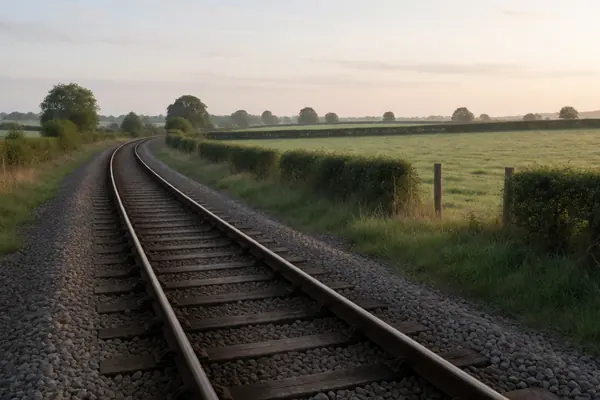
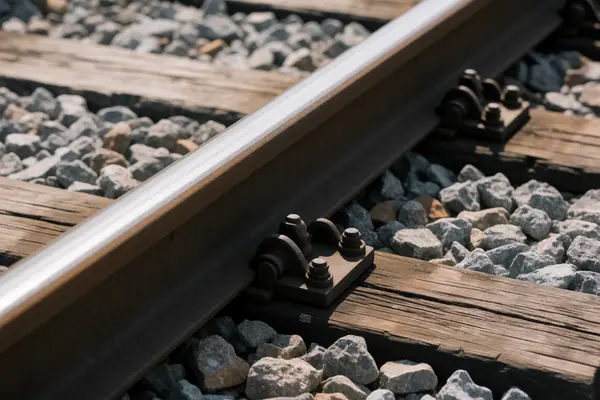
STANDARD GAUGE
4 ft 8½ in
Most early railways used 4 ft 8½ in, sometimes confusingly called 'narrow gauge'. It became the standard for all railways in the UK.
Compare gaugesRAILWAY HISTORY
The gap between two rails decides where a train can go.
In Victorian Britain two widths competed: the 4 ft 8½ in gauge used by most lines, and the 7 ft broad gauge chosen for the Great Western Railway. Trains on one could not run on the other.
Questions this page answers
1,435 mm standard gauge
THE SHORT ANSWER
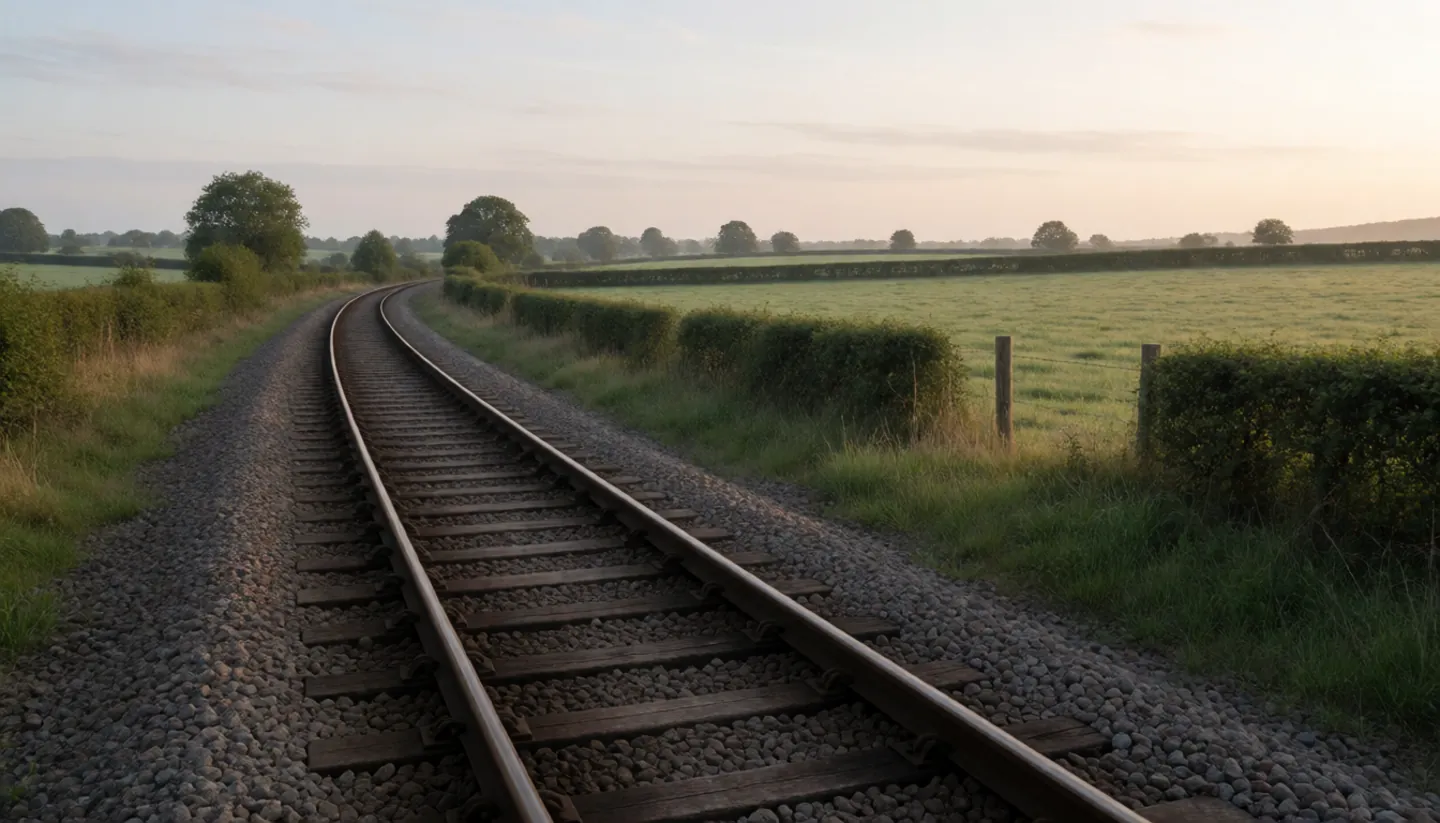
Standard gauge: 4 ft 8½ in (1,435 mm).
Broad gauge: 7 ft ¼ in (2,140 mm).
STANDARD GAUGE
Most early railways used 4 ft 8½ in, sometimes confusingly called 'narrow gauge'. It became the standard for all railways in the UK.
Compare gaugesBROAD GAUGE
Isambard Kingdom Brunel built the Great Western Railway to 7 ft ¼ in. Its directors accepted his recommendation in 1835.
See the numbersTHE BIG CHANGE
With mixed track already laid on much of the route, 4,200 workers converted the last broad gauge lines over a single weekend.
How it endedCOMPARE GAUGES
Pick a kind of track to see its width and story. The bar shows how wide the gap between the rails was.
Based on Science Museum Group collection records and the Friends of the National Railway Museum.
TWO NUMBERS WORTH KNOWING
The final broad gauge conversion,
May 1892.
171 miles
Route miles converted over one weekend
The last broad gauge route was converted over a single weekend, 42 miles of it double track. Mixed gauge already existed on much of the rest.
CONVERSION · MAY 1892
4,200
Platelayers and labourers drafted in
The workers stayed in station waiting rooms, goods sheds and tents over the weekend while they narrowed the track.
WORKFORCE · MAY 1892
The change to standard gauge cost around £800,000, which the Friends of the National Railway Museum put at roughly £108 million in 2021 values.
THE GAUGE WAR IN FOUR DATES
How Britain went from two railway widths to one.
The Great Western Railway Bill gets Royal Assent and the directors adopt Brunel's broad gauge.
After a Gauge Commission, the Gauge Act of 16 August 1846 favours the narrower gauge but does not force the GWR to convert.
A standard gauge third rail is added to broad gauge lines so both kinds of train can run.
On 20 May 1892 the last through broad gauge train to Penzance leaves Paddington, and the final section is converted.
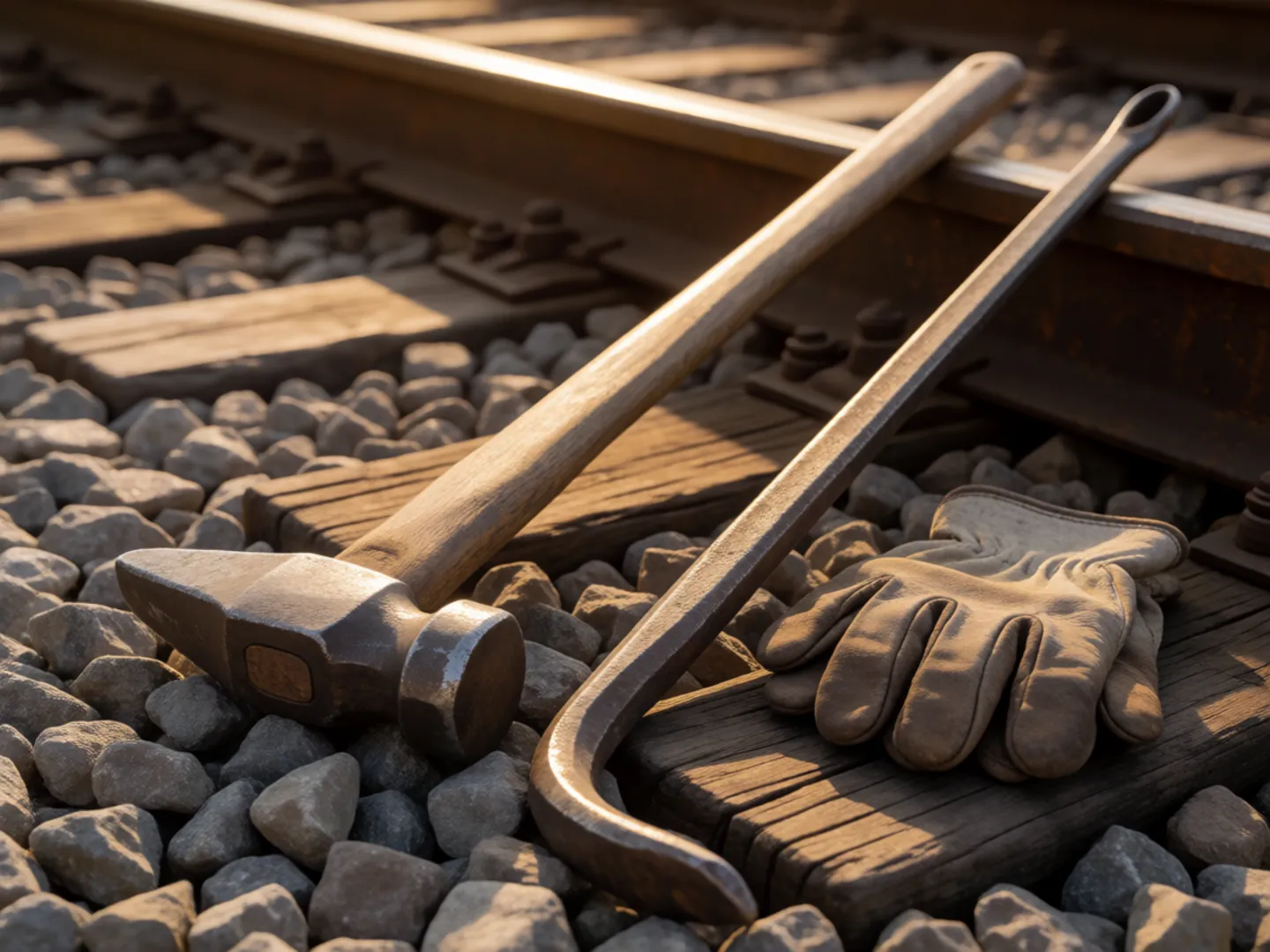
THE LAST WEEKEND
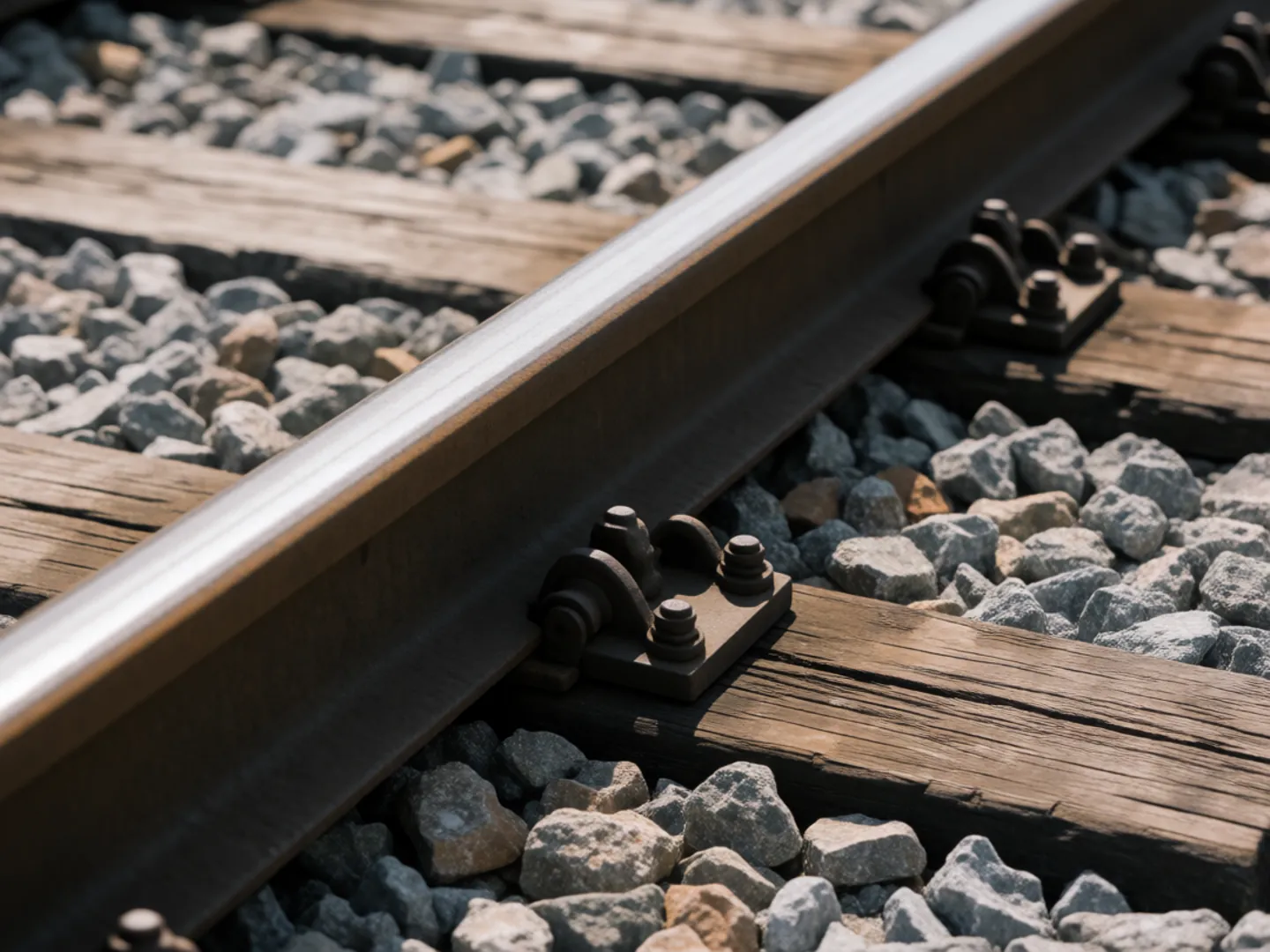
The last through broad gauge train to Penzance left Paddington at 10.15 a.m. on 20 May 1892, watched by large crowds at Swindon, Bristol, Exeter, Newton Abbot and Plymouth.
Much of the rolling stock had been built to be converted: the GWR had 426 broad gauge coaches that could be changed to standard gauge, and 129 that could not.
QUESTIONS PEOPLE ASK
The distance between the two rails. In Britain the standard is 4 ft 8½ in, or 1,435 mm.
Brunel recommended a wider gauge for the Great Western Railway and the directors accepted it by a large majority in 1835. The track was 7 ft ¼ in wide.
It noted the advantages of the narrower gauge for the whole system, but did not compel the Great Western Railway to convert its existing broad gauge lines.
The last section of the Great Western Railway was converted to standard gauge in May 1892, after 57 years of broad gauge running.
The Science Museum commissioned a full-size working replica of the broad gauge locomotive Iron Duke in 1985, capable of being steamed.
Some people at the time confusingly called the 4 ft 8½ in standard gauge 'narrow gauge', in contrast with Brunel's 7 ft ¼ in broad gauge. GWR chairman Frederick Saunders used the term when planning the 1892 change: work east of Exeter could be done at leisure, but the single lines west of Exeter were to become double narrow gauge, and 750 carriages could not be converted in a day.
The Friends of the National Railway Museum list a mass of objections. Eton College campaigned against it, landowners feared for their estates, and others warned of dangerous cuttings, derailments, carriages unable to take curves, passengers deafened by the noise, cattle driven mad and even the River Thames drained, threatening Windsor Castle's water.
For 31 of the broad gauge's 57 years, the GWR ran on an increasing amount of mixed gauge track, with a third rail so trains of both widths could use the same line.
Sources
ABOUT THIS NAME
doodletracks.com is part of the DoodleSale portfolio. It isn't in an auction right now, but you can ask about leasing it.